Load-Bearing Denim: The Quiet Case for Altering What You Already Own
Every American downtown contains at least one building that proves a point: the structure worth keeping is rarely the one that looks newest. It is the one with good bones. The same logic, a handful of practitioners argue, should govern what hangs in your closet.
A movement that fashion commentary keeps mislabeling as a trend — visible mending, creative tailoring, garment remodeling — is better understood as preservation work. Rather than demolishing a jacket at the first sign of wear, its adherents reinforce it, re-cut it, and in some cases celebrate the repair itself. The result is clothing with a documented history, worn the way a renovated loft wears its original brick.
The Preservationists of the Rack
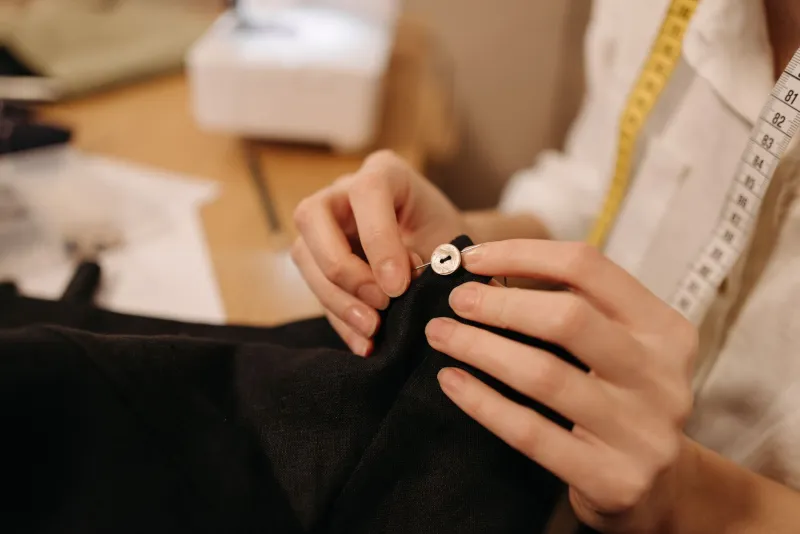
In Chicago, alterations specialist Marta Reyes describes her booking calendar as a mix of necessity and intent. "Ten years ago, someone came in to hem pants before an interview. Now half my week is people bringing in a ten-year-old blazer and asking what we can do with it," she says. "They don't want it to look new. They want it to look considered."
Reyes is part of a loose network of US-based tailors and upcyclers whose business has grown alongside rising sticker prices and growing skepticism about fast-fashion quality. In Portland, upcycling studio Reconstruct Workshop takes the idea further, turning damaged workwear into one-off pieces where the original garment's seams and repairs remain deliberately visible — sashiko-style stitching in contrasting thread, patch panels cut from the garment's own lining.
"A repair shouldn't apologize," says founder Devon Aoki-Chen. "In architecture, the renovation that respects the original structure always outlasts the one that erases it. Clothing is no different."
The philosophy aligns neatly with the structural approach to dressing: a garment is a system of load-bearing elements. Shoulders, waistbands, and seam allowances carry the stress. When those elements fail, the question isn't whether the piece is finished — it's whether the foundation is sound enough to rebuild on.
The Cost Ledger: Remodel Versus Replace
The economics favor the renovation in most cases, though not all. A realistic comparison for the US market:
| Service | Typical Cost |
|---|---|
| Trouser hem or taper | $20–$35 |
| Blazer sleeve adjustment | $40–$70 |
| Waistband reconstruction on denim | $45–$80 |
| Full relining of a coat | $120–$250 |
| Visible-mend repair (knees, elbows) | $25–$60 |
| Mid-tier new blazer (comparable quality) | $300–$600 |
A $60 sleeve adjustment on a $400 blazer is not a expense; it is maintenance, roughly the cost of one dry-cleaning cycle per year over the garment's extended life. The arithmetic turns decisively in remodeling's favor when the original piece was well-constructed — full linings, generous seam allowances, natural fibers — because those are precisely the features worth preserving.
The exception is the poorly made garment. No alteration can add structure that was never there.
The Inspection: What Deserves a Renovation Permit
Before commissioning work, assess the garment the way an inspector would assess a building:
Sound foundations. Turn the piece inside out. Look for seam allowances of at least half an inch, finished interior edges, and pattern-matching at major seams. These signal a garment built to be worked on.
Natural fiber content. Wool, cotton, linen, and denim take to alteration gracefully and age into repairs rather than around them. Synthetics with fused interlinings often cannot be opened and rebuilt without delaminating.
Structural damage, not cosmetic damage. A blown elbow, a worn cuff, a stretched waistband — all are routine renovations. A shattered fusible interfacing or pervasive fabric degradation is demolition territory.
Emotional load-bearing capacity. The pieces worth remodeling are the ones you actually reach for. Alteration budgets should follow wear frequency, not sentiment alone.
When to Deconstruct
Some structures must come down responsibly. A garment beyond repair still holds value as raw material: sound fabric panels can become patch material for other pieces, buttons and zippers move to new hosts, and cotton or wool textiles can enter textile-recycling streams rather than landfills. Several US municipalities now accept textiles in curbside or drop-off programs; brands including Patagonia and For Days operate take-back channels for worn-out goods.
Deconstruction, done properly, is not failure. It is the final stage of a garment's service life, and the material it yields may become the patch that keeps a favorite piece standing another decade.
Build Once, Maintain Forever
The remodeling movement ultimately makes the same argument that good architecture always has: the cheapest building is the one you never have to tear down. Buy fewer pieces, buy them with structure worth preserving, and budget for their upkeep the way a homeowner budgets for a roof.
Your best-dressed decade will not be the one with the newest clothes. It will be the one with the clothes that were built — and maintained — to last.