Thirty Days, Five Garments: A Field Test in Load-Bearing Dressing
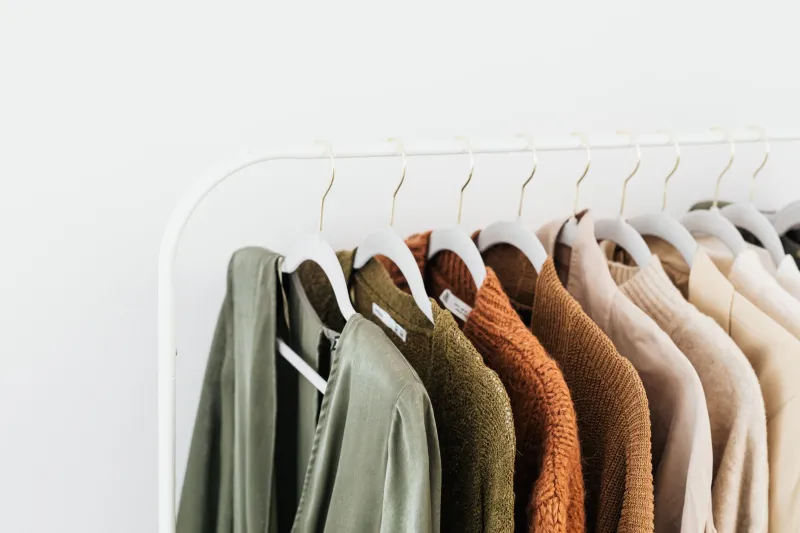
Every building has a moment of truth: the day the scaffolding comes down and the structure must stand on its own. I wanted to know whether a wardrobe could pass the same inspection. So for thirty consecutive days, I dressed from a rotation of exactly five garments — a charcoal double-breasted blazer, a heavyweight white poplin shirt, straight-leg raw denim, a black merino turtleneck, and a pair of leather derby shoes. No shopping. No borrowing. No exceptions.
What follows is not a fashion experiment in the frivolous sense. It is a stress test, conducted on my own closet, in real American weather, from a Chicago October into a Chicago November — which, as anyone from the Midwest knows, is its own kind of structural challenge.
The Blueprints: Establishing the Five
The selection process mattered more than the month itself. Following the logic we often apply here at Edifice — that every outfit is a small construction project — I chose each piece the way an engineer chooses a load-bearing wall: for what it could carry, not just how it looked standing alone.
The blazer was the roofline, establishing the silhouette of nearly every ensemble. The poplin shirt and merino turtleneck served as interchangeable interior frameworks, shifting the outfit's temperature and tone. The denim was the foundation — quite literally the piece that touched the ground — and the derbies were the footings, the point where the entire structure met the street.
Total investment: roughly $1,140. That number loomed large on day one and became almost meaningless by day thirty.
Week One: The Fatigue Phase
I will not romanticize the beginning. Days one through seven were dominated by a low-grade anxiety I came to call outfit fatigue — the nagging sense that everyone at the office had already seen this exact combination. By day four, a coworker asked, without malice, if I'd "joined a uniform program."
But something shifted around day six. The anxiety was based on a false premise: that variety requires volume. Once I accepted the constraint, my attention moved from what I was wearing to how it was assembled. Sleeves pushed or buttoned. Collar open or closed. Blazer over turtleneck versus shirt layered beneath it. The five garments began behaving less like five items and more like a kit of parts.
Cost-Per-Wear: The Math That Changes Minds
By the midpoint, I ran the numbers. At $1,140 across thirty days, my cost-per-wear was falling fast — and unlike a impulse-purchased novelty jacket worn twice, these pieces would keep depreciating their cost for years. The blazer, worn twenty-six of thirty days, dropped below $4 per wear within the month and will likely end its life at pennies.
This is the quiet argument for structural basics that no seasonal trend cycle wants you to hear: the garments you wear most are, by definition, the best investments you own. A $90 top worn three times costs $30 per wear. A $300 blazer worn 200 times costs $1.50. Restraint doesn't just simplify your morning; it rewires the entire economics of your closet.
Week Three: Where the Structure Showed
The third week delivered the experiment's most valuable insight. Forced to attend a wedding, a client presentation, and a weekend of errands in the same five pieces, I discovered that occasion-appropriateness lives almost entirely in styling and posture, not in inventory. The blazer with the turtleneck read boardroom. The blazer over the open poplin, sleeves rolled, read Saturday. The same column of fabric, bearing different loads.
There is a reason architects love a column: a single vertical element can support endless configurations above it. My five garments worked the same way. The pieces didn't limit the outfits — they enabled them, providing a stable frame onto which accessories, outerwear, and attitude could be hung.
What Cracked Under Load
Honesty requires a structural deficiency report. The raw denim, worn roughly every other day for a month, began to show its character — which is the point of raw denim — but also its limits in a professional context. The turtleneck, for all its merit, revealed itself as climate-specific: a hero in the second half of the month, a liability had the experiment begun in July. And I missed color. Not constantly, but enough to learn that my wardrobe's palette, like a building's facade, earns its restraint through occasional moments of accent.
The Renovation That Follows
The experiment ended, but the closet it produced did not revert. I returned to my full wardrobe and immediately identified — with uncomfortable clarity — which hanging items were structural and which were decorative clutter. Roughly a third of my closet failed the inspection. It has since been donated.
The lasting lesson is this: you do not learn what your wardrobe is made of by adding to it. You learn by subtracting until only the load-bearing pieces remain. Thirty days and five garments later, I can report that the structure held — and that what holds everything up, it turns out, is far less than we think.