One Column Holds the Roof: Choosing the Garment That Carries Your Look

Ask any structural engineer what happens when two columns try to carry the same weight, and the answer is rarely flattering. Stress distributes unevenly. The frame fights itself. The whole system performs worse than it would with one clear point of support. Fashion, for all its romance, obeys the same law.
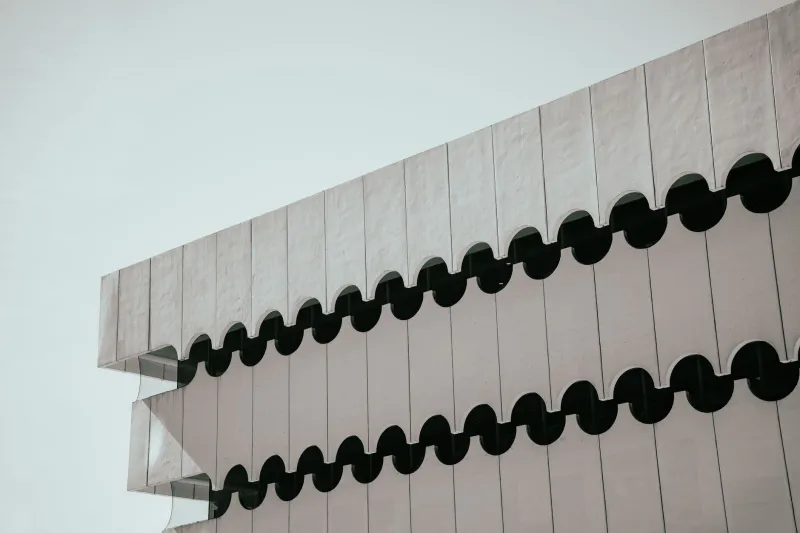
We have said before that a great outfit is built like a building. What we have not said often enough is that a great outfit has only one load-bearing element. The rest is reinforcement. This is not a styling suggestion; it is, in our view, the single most useful rule in American dressing today.
The Myth of the Double Statement
The instinct to stack statements is understandable. You buy the oversized sculptural blazer from a New York atelier, then the acid-washed wide-leg trousers from an LA studio, and the logic seems sound: two great pieces, one great outfit. But visual weight behaves like physical weight. Two competing focal points split attention down the middle, and the eye — like a load path — must resolve somewhere. When it cannot, the outfit reads as noise rather than architecture.
Consider the enduring power of a single strong image: a structured coat over quiet black separates. The coat does all the work. Nothing argues with it. That is not minimalism for its own sake — it is load management.
Identifying Your Showpiece
Not every bold garment deserves the column position. The piece that carries the load should satisfy three tests:
- Structural presence. It should have architecture built in — a shoulder, a hem, a seam — not merely surface drama. A print is decoration; an exaggerated sleeve is structure.
- Proximity to the face or the line. Showpieces work hardest near the neckline or along the body's vertical axis, where they establish the outfit's silhouette the way a facade establishes a building's identity.
- Personal conviction. If you would hesitate to wear it to the grocery store, it may be a costume rather than a column. The load-bearing piece must be one you can actually live inside.
American designers offer abundant models. Think of the padded-shoulder tailoring that has defined recent collections from designers like Christopher John Rogers, whose voluminous forms command an entire look while the rest of the ensemble recedes. Or the architectural outerwear tradition running from Halston's clean columns to the sculptural coats of Proenza Schouler — garments designed to be the whole sentence, not part of a paragraph.
The Reinforcement Formula
Once the showpiece is chosen, everything else becomes support structure. We suggest a simple formula that readers can apply without a stylist:
- One showpiece. The structural statement. Full stop.
- Two neutrals. Grounding garments in black, ivory, camel, slate, or navy — colors that recede rather than compete.
- One texture echo. A subtle material repetition — a matte knit against a glossy coat, a slouchy leather bag against crisp tailoring — that ties the frame together without adding a second argument.
The proportion matters as much as the count. If the showpiece is voluminous above, the lower half narrows. If the statement lives in the trousers, the top compresses. This is the same logic a builder applies when a cantilever extends: something below must be heavier to keep the whole thing standing.
When the Rule Bends
Editorial honesty requires an admission: rules exist to be tested. Street style in New York and Los Angeles regularly produces double-statement looks that work — but almost always because one of the two statements has been deliberately de-structured. A dramatic top paired with dramatic trousers succeeds when one of them is softened, washed out, or broken in. The apparent exception still obeys the principle; it has simply disguised its reinforcement.
There is also seasonal nuance. Winter layering tempts everyone toward accumulation, but cold-weather dressing is precisely where the single-column rule earns its keep. One monumental coat over disciplined layers photographs better, packs better, and ages better than three competing mid-layers ever will.
The Discipline of Restraint
Some readers will find this argument limiting. We find it liberating. The one-showpiece rule is not a ceiling on expression — it is a spotlight. It forces a daily decision about what you actually want to say, and it protects the pieces you love from being drowned in company.
The most confident dressers in any American city are rarely the ones wearing the most. They are the ones wearing one thing that everyone else remembers. Build the outfit around that. Let everything else hold it up.