What the Seams Keep Secret: Inside the Hidden Framework of Structured American Fashion
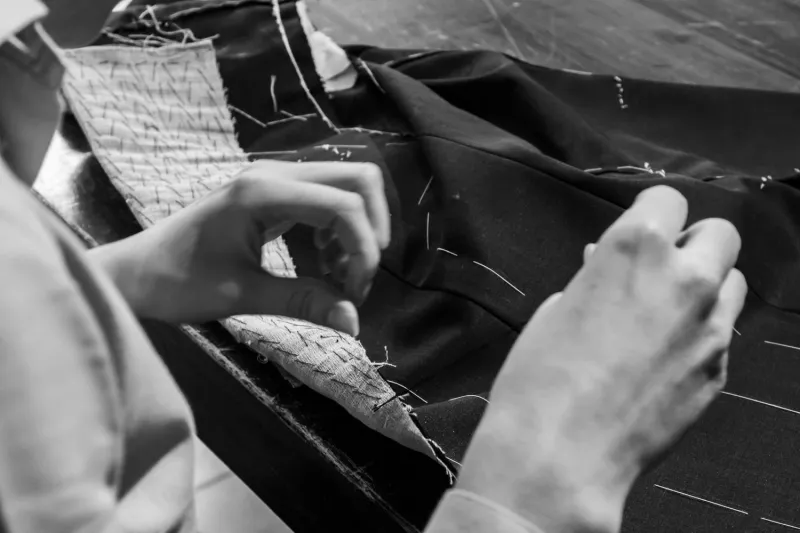
Photo: tailor inspecting blazer interior canvas construction workshop, via images.squarespace-cdn.com
Every building worth admiring has a foundation no one photographs. Fashion operates on the same principle. The sharp shoulder of a New York-made blazer, the sculpted bodice of a Los Angeles gown, the unyielding front of a Chicago overcoat — all of it is held in place by an interior world most wearers will never inspect.
This is a guided tour of that world. Consider it a walkthrough of the mechanical floors beneath the penthouse.
The Skeleton Under the Surface
Ask any American tailor trained in the old tradition and they will tell you the same thing: the outside of a garment is only as honest as its inside. Structured jackets from heritage houses and independent ateliers alike rely on an internal chassis — a canvas of horsehair, haircloth, or modern fusible alternatives stitched between the shell fabric and the lining.
This canvas is what allows a lapel to roll instead of fold. It is why a chest feels sculpted rather than padded. In a well-constructed piece, the canvas shrinks and molds to the wearer over years, meaning the jacket genuinely becomes yours in a way a fused, glue-constructed garment never can.
The distinction matters more than ever as American menswear and womenswear alike lean into architecture-forward silhouettes. A dramatic shape built on inferior internals collapses by the second wear. A dramatic shape built on proper internals becomes a signature.
Boning, Seams, and the Physics of Shape
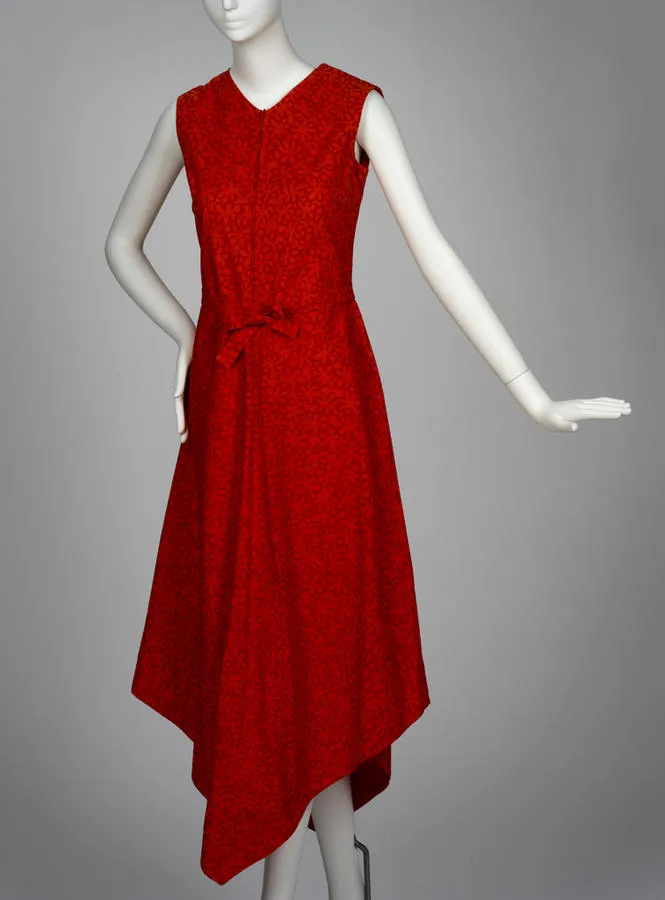
Open the interior of a structured dress from a rising American designer and you may find something unexpected: boning. Borrowed directly from corsetry, steel or plastic stays are sewn into seam allowances to keep a bodice vertical, a neckline from buckling, a hem from swinging.
The placement is never arbitrary. Bones follow the load paths of the garment — the vertical lines where gravity pulls hardest. A strapless bodice without them is a building without rebar. The same logic governs shoulder structures in coats: sleeve heads built up with wadding and shoulder pads distribute the weight of heavy wool across the shoulder line so the drape stays clean rather than sagging toward the collarbone.
For the wearer, the takeaway is practical, not academic. When evaluating a structured piece in a fitting room, turn it inside out — or at least look through the lining at the seams. Straight, anchored, reinforced internal seams signal a garment engineered to hold its geometry. Wavy seams and floating layers signal a shape that will not survive a season.
The Lining as Load-Bearing Layer
Linings are commonly understood as the finishing touch, the pretty fabric against the skin. In structured garments, they do structural work. A full lining reduces friction, allowing a heavy coat to move over a suit instead of dragging it. A partial lining, by contrast, deliberately leaves interior architecture exposed — a choice some American designers make to celebrate construction as design.
The material of the lining also determines thermal behavior. Bemberg cupro, silk, and technical blends each manage heat and moisture differently, which matters for a commuter moving from a heated subway platform to a wind-whipped sidewalk. In this sense, the lining is the garment's climate control system, invisible and indispensable.
Why the Interior Should Inform Your Next Purchase
The modern shopper has been trained to assess color, fit, and price. The architecture-literate shopper adds a fourth criterion: internal integrity. Before investing in a structured blazer, overcoat, or dress, examine three things.
First, the chest construction. A floating canvas — detectable by the way the front drapes and the slight give when pinched between layers — outlasts any fused alternative.
Second, seam reinforcement. Look for bar tacks at stress points, bound or finished interior seams, and stays at the ends of shoulder straps or waistbands.
Third, the honesty of the shape. Press gently against the most sculptural element of the garment. If it springs back, the framework is real. If it creases and stays creased, the silhouette is cosmetic.
The Case for Looking Underneath
American fashion has always had a pragmatic streak — workwear, denim, the belief that things should be built to last. The current wave of architectural design channels that ethos into sharper, more sculptural forms. The best of these pieces are not costumes of structure; they are genuinely engineered objects.
Understanding what happens beneath the lining transforms how you shop, how you wear, and how long your wardrobe serves you. The exterior makes the statement. The interior keeps the promise. Choose garments that do both, and your closet becomes less a collection of clothes and more a portfolio of well-built assets.