Districts of Dress: Why Your Closet Needs Zoning, Not Another Color Sort
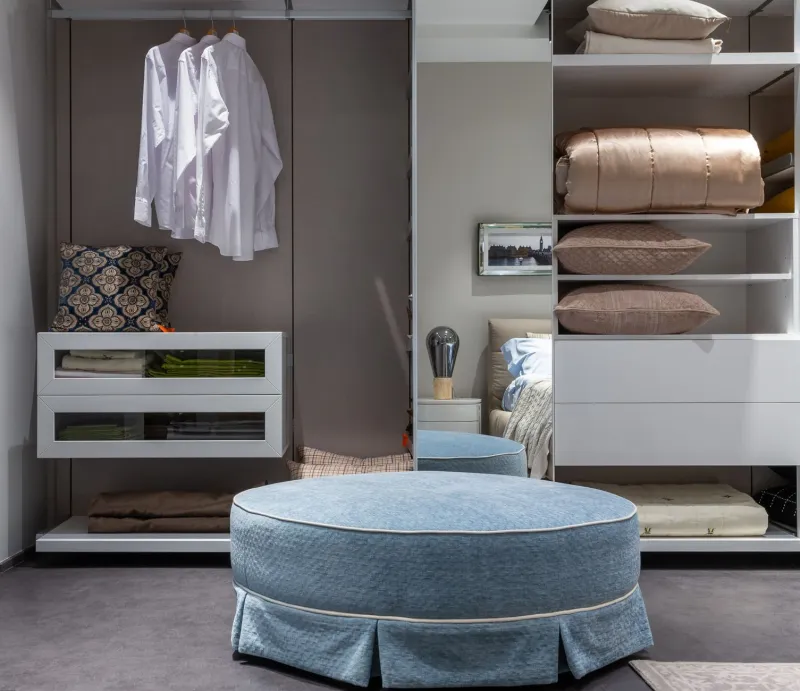
Urban planners learned long ago that a city without zoning descends into chaos. A tannery next to a kindergarten. A warehouse squatting on prime residential land. A downtown so congested that nothing moves. Sound familiar? It should. That's what most American closets look like on a Tuesday morning: everything crowded together, nothing in its right place, and no clear route from where you are to where you need to go.
Color-sorted closets photograph beautifully, but they answer the wrong question. Sorting by hue tells you what you own, not how you live. Seasonal rotations fare little better — they simply relocate the chaos twice a year. What actually works is treating your wardrobe the way a city planner treats a municipality: as territory to be divided into districts, each with a distinct purpose and a distinct density.
The Residential District: Where Your Wardrobe Actually Lives
Every city needs housing, and every closet needs a residential zone — the dependable, mid-density garments you occupy daily. The broken-in raw denim. The oxford shirt that has survived three laundromat regimes. The crewneck sweater that asks nothing of you.
Reserve the most accessible real estate in your closet for this district: eye level, arm's reach, prime shelving. These pieces should be the easiest to retrieve because they carry the majority of your wearing hours. In planning terms, this is your mixed-use zoning — flexible, durable, and designed for daily occupancy rather than special occasions.
Be honest about the census here. Most people dramatically overestimate their residential stock. Count the garments you've actually worn in the last two weeks. If that number is small and the district is large, you've got vacant lots — clothes taking up prime space without contributing to the neighborhood.
The Commercial District: Statement Pieces Zoned for Impact
Downtown exists for commerce, spectacle, and foot traffic. Your commercial district is the equivalent: the bold, structured pieces that generate attention. The sharply shouldered blazer. The asymmetric coat that stops conversation. The sculptural piece that works precisely because it doesn't blend in.
These garments should be zoned separately from your residential stock, and for a practical reason: statement pieces are high-value, low-frequency assets. Burying them among t-shirts guarantees they'll go unworn — out of sight, out of outfit. Give them dedicated hanging space with clearance on either side, the way a city gives its landmark buildings a proper plaza rather than squeezing them between strip malls.
A well-planned commercial district also reveals opportunity. When your statement pieces are grouped together, you can see which ones share a palette or a silhouette, making it far easier to build an outfit around one of them on the occasions that justify the permit.
The Industrial District: Utility, Layers, and the Working Class of Your Wardrobe
No city functions without its industrial zones — unglamorous, essential infrastructure. Your closet's industrial district holds the utilitarian layer: base layers, thermal underwear, rain shells, workwear-grade flannels, the puffer that lives in your trunk from November through March.
These pieces don't need prime real estate. Zone them high, low, or in overflow storage — anywhere that acknowledges their function over their form. What matters is that they're quarantined from your daily-use districts so they stop crowding the garments you reach for every morning.
The industrial district is also where weather strategy lives. In a country where a single week can deliver a Nor'easter and a sixty-degree Thursday, keeping your meteorological defenses organized but out of the way is the difference between a functional wardrobe and a congested one.
Conduct Your Own Infrastructure Audit
Once your districts are drawn, the real diagnostic begins. Walk your closet like a planner reviewing a master plan and ask three questions of each zone.
First: Is any district overcrowded? A residential zone stuffed to bursting with near-identical grey tees is a housing surplus — you've built more supply than demand, and the excess is just dead weight.
Second: Is any district underbuilt? This is the most common finding. Many wardrobes have a flourishing commercial district — all statement, all the time — sitting atop a residential zone that can't support it. You own three extraordinary blazers and nothing reasonable to wear beneath them. That's a city with a stadium and no roads leading to it.
Third: Are there mixed-use violations? The gown from a wedding four years ago hanging in your residential district. The hoodie you claim is industrial but wear to dinner. Reclassify honestly, or relocate.
Maintenance, Not Monuments
Cities are never finished, and neither is a zoned closet. The system works because it's a living plan, not a one-time renovation. Institute a simple review — quarterly is sufficient. Return strays to their districts, retire what no longer serves, and note which zones need new construction before your next shopping trip.
That last point is the quiet revolution of the method. Once you know your districts, you stop buying randomly. A purchase is no longer an impulse; it's a permit application. Does this piece fill a gap in the residential district, or does it duplicate something the commercial zone already holds in triplicate? Zoning turns shopping from accumulation into planning.
The result is a wardrobe that functions like a well-planned American city: easy to navigate, honest about what it contains, and built so that every morning, you can move from where you are to where you're going without getting stuck in traffic.