Blueprint Your Wardrobe: The Grid System That Eliminates Getting Dressed Paralysis

Photo by Photo by CHUTTERSNAP on Unsplash on Unsplash
There is a reason the grid has endured as one of architecture's most powerful organizational tools. From the Beaux-Arts street plans of Midtown Manhattan to the modular facades of Chicago's commercial district, the grid does not restrict — it liberates. It converts complexity into clarity, and chaos into purposeful structure. Your wardrobe, it turns out, is no different.
Most Americans accumulate clothing the way cities sprawl without zoning laws: reactively, inconsistently, and with little regard for how each new addition integrates with what already exists. The result is a closet full of pieces that rarely speak to one another, a daily ritual of frustration, and a quiet but persistent sense that nothing ever quite works. The architectural solution to urban sprawl is deliberate planning. The solution to wardrobe sprawl is exactly the same.
The Modular Principle: Your Closet as a Building System
In modular architecture, individual components are designed to function both independently and in combination with one another. A structural bay can stand alone or connect seamlessly to the next. This principle — sometimes called systems thinking — is the foundation of every truly versatile wardrobe.
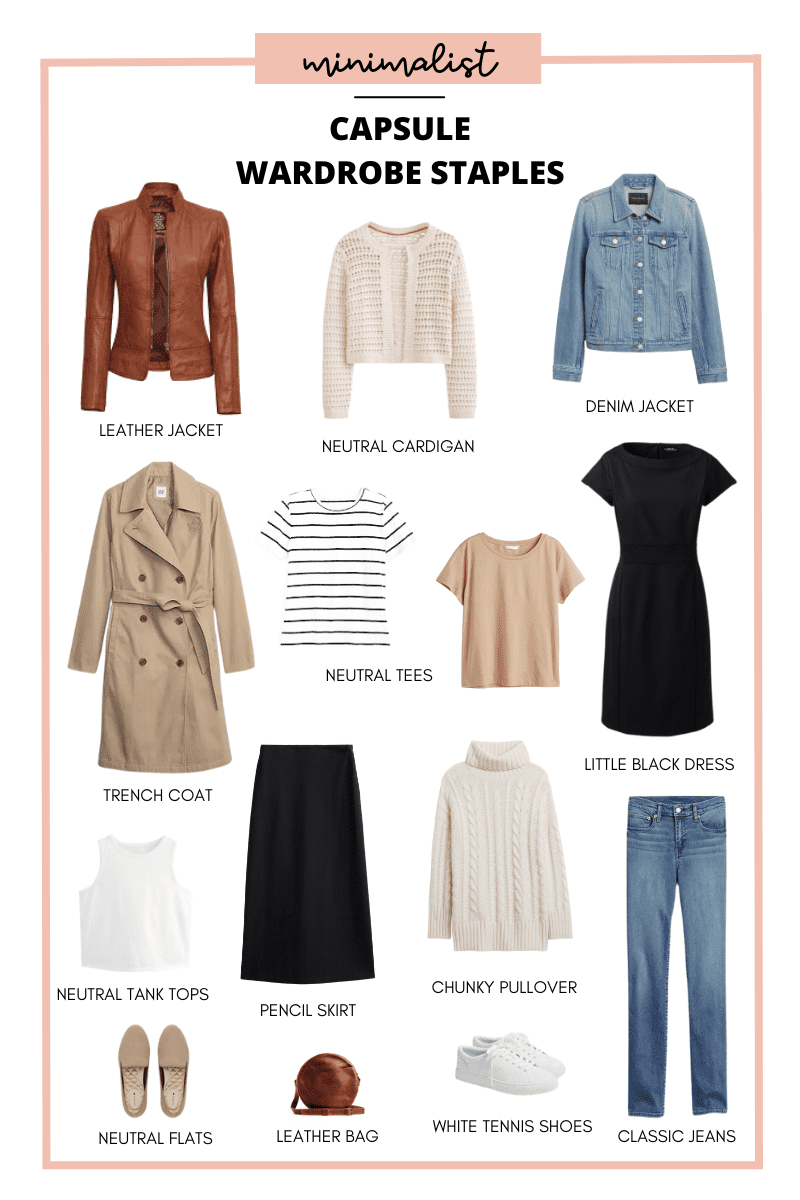
Begin by auditing your existing pieces not by category (tops, bottoms, outerwear) but by what architects might call load-bearing capacity: the number of viable outfit combinations each item can anchor. A charcoal structured blazer that pairs with tailored trousers, dark denim, and wide-leg trousers carries significant load. A novelty graphic tee that works with one pair of shorts carries almost none. When you map your wardrobe this way, the under-performers become immediately visible — and so do the gaps where a single strategic addition could exponentially increase your outfit yield.
The goal is not minimalism for its own sake. It is density of function. Every piece should earn its square footage.
Drawing the Grid: A Practical Framework
Architectural grids work because they establish consistent intervals — predictable units of measurement that allow every element of a design to relate proportionally to every other. Translated into wardrobe terms, your grid is defined by three axes: color, silhouette, and formality register.
Color operates as your structural column. Identify three to four anchor tones that recur across your closet — not necessarily neutrals, but colors with genuine compatibility. Navy, ivory, and warm camel form one such system. Slate gray, black, and a single saturated accent form another. Every new acquisition should map onto this palette before it earns a place in the grid.
Silhouette functions as your floor plate — the horizontal dimension that determines how pieces stack. A wardrobe built entirely of slim, close-cut pieces has no visual contrast and no dynamic range. One built entirely of volume has no anchor. The most architecturally coherent wardrobes alternate deliberately: a cropped, structured jacket over a fluid wide-leg trouser; an oversized coat over a precisely fitted turtleneck. The contrast is the design.
Formality register is your vertical axis — the range from fully casual to strictly professional. Map where your life actually requires you to operate and build density in those zones first. A wardrobe heavily weighted toward weekend casual that must occasionally perform at business meetings needs a handful of high-formality load-bearers, not an entire new section.
The Psychology of Constraint: Why Fewer Options Produce Better Decisions
Research in behavioral psychology has consistently demonstrated that an abundance of choices does not produce greater satisfaction — it produces paralysis and regret. Psychologist Barry Schwartz called this the paradox of choice, and it manifests in closets across the country every morning at 7 a.m.
Architects understand constraint as a creative force rather than a limitation. The site's boundaries, the structural requirements, the budget — these parameters do not diminish the design. They focus it. When a designer knows precisely what a building must do, every decision becomes sharper and more intentional.
Applying this logic to personal style means accepting that the most powerful wardrobe is not the largest one. It is the most coherent one. When every piece in your closet belongs to the same deliberate system, getting dressed becomes less an act of improvisation and more an act of assembly — confident, efficient, and consistently successful.
Zoning for Versatility: The Capsule as Urban District
Urban planners use zoning to ensure that each district of a city serves a clear function while remaining connected to the whole. Your wardrobe benefits from the same approach. Rather than organizing by garment type, consider organizing by context zone: work, weekend, formal occasion, and transitional.
The transitional zone is where architectural thinking pays its greatest dividends. These are the pieces that move fluidly between districts — a sharply cut ponte blazer that works over a T-shirt at a creative agency and over a blouse at a client dinner; a structured midi skirt that transitions from a Saturday gallery visit to a Sunday evening reservation. Transitional pieces are the connective tissue of a well-zoned wardrobe, and they are typically the most underinvested category in most American closets.
Prioritize them accordingly.
Sustainable Style as Structural Integrity
One of the less-discussed benefits of grid-based wardrobe thinking is its environmental logic. When you acquire pieces through a systematic framework rather than impulse, you buy less and wear more. You stop accumulating redundant items that duplicate function without adding versatility. You invest in quality because you understand exactly how each piece will be used and how often.
The fast fashion economy profits from the absence of a plan. It depends on the gap between what you own and what you need feeling perpetually unbridgeable. A wardrobe built on architectural principles closes that gap — not by filling it with more product, but by designing the system so that gap ceases to exist.
Building Forward
The grid is not a cage. It is a scaffold — a structure that supports construction rather than limiting it. Once your wardrobe operates as a coherent system, you have the freedom to introduce bolder pieces, experiment with proportion, and take risks that a disorganized closet never permits. Architectural innovation does not happen in spite of structural discipline. It happens because of it.
Treat your closet like a blueprint. Draw the grid. Build with intention. The results will speak for themselves.