The Architect's Wardrobe: A Structural Guide to Building Your Capsule Collection
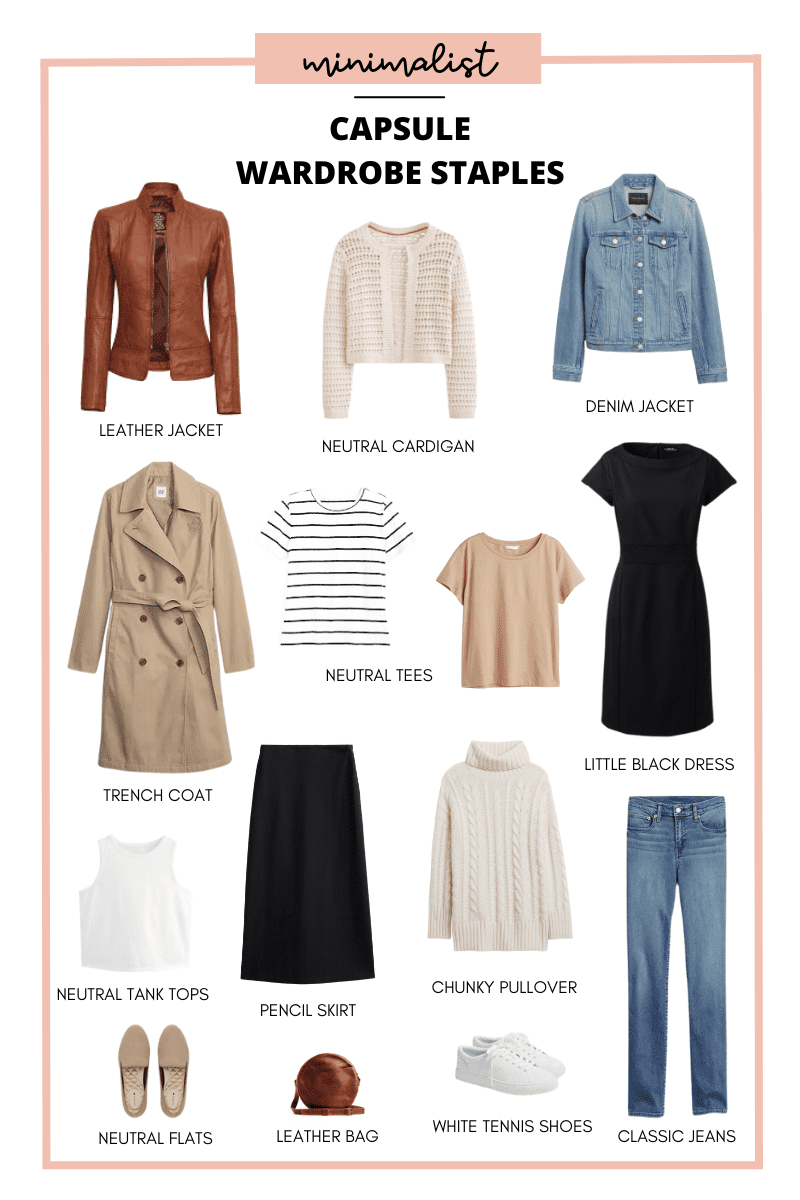
Photo: minimalist capsule wardrobe structured clothing flat lay neutral tones, via athomeontheprairie.com
An architect does not begin a project by selecting paint colors. Before any surface treatment is considered, there is a blueprint — a precise, intentional diagram of how space will be organized, how weight will be distributed, and how each component will relate to every other. The building takes shape in the drafting room long before it takes shape in the physical world.
Building a wardrobe deserves the same discipline. The most coherent, versatile, and enduring personal styles are not assembled impulsively — they are designed. What follows is a practical framework for approaching your closet the way a skilled architect approaches a commission: with structural logic, an eye for proportion, and a deep respect for the relationship between form and function.
1. Define Your Program Before You Shop
In architectural practice, the "program" is the document that defines what a building must accomplish — how many rooms, what functions, who will use the space, and under what conditions. Before any design decisions are made, the program establishes the parameters within which the architect must work.
Your wardrobe program is the equivalent exercise. Before acquiring a single new piece, spend time documenting the actual conditions of your life. What environments do you dress for most frequently — an office, a client-facing role, weekend social occasions, travel? What is the climate in your city across the year? How many days per week do you need to present a polished appearance versus a more relaxed one?
Answering these questions honestly will prevent the single most common wardrobe error: purchasing pieces that are beautiful in isolation but irrelevant to your actual daily life. The most architecturally sound wardrobe is one built for the life you live, not the life you imagine.
2. Establish Your Load-Bearing Pieces First
Every structural system has load-bearing elements — the components that support everything else. In a building, these are the columns and beams. In a capsule wardrobe, they are your foundational pieces: the items that appear in the highest percentage of your outfits and form the backbone of your personal style.
For most American wardrobes, load-bearing pieces include:
- A well-tailored trouser in a neutral tone — charcoal, black, navy, or camel — with a clean, structured silhouette
- A substantial blazer or structured jacket that can transition between professional and casual contexts
- A crisp, high-quality white shirt with considered construction details
- A versatile coat with architectural weight — a piece substantial enough to anchor an entire look
These are not the pieces you choose for novelty. They are chosen for structural reliability — for their ability to carry the weight of your wardrobe system. Invest accordingly.
3. Apply the Principle of Negative Space
In architecture and visual design, negative space — the empty area surrounding a form — is as meaningful as the form itself. A building without considered negative space feels crowded, incoherent, and visually exhausting. A wardrobe without negative space produces the same effect.
Negative space in a closet context means restraint: the deliberate decision not to fill every available slot. A capsule wardrobe of 30 to 40 considered pieces will serve you more effectively than a closet of 120 items with no internal logic. The space between your pieces — the gaps in your rotation — is what allows each garment to register fully, both visually and in terms of utility.
Practically, this means editing aggressively before adding. For every new piece that enters your wardrobe, at least one existing piece should be evaluated for removal. The goal is not minimalism for its own sake, but clarity of structure.
4. Think in Modules, Not in Outfits
One of the most productive shifts in wardrobe thinking is moving from outfit-based planning to module-based planning. Outfit-based thinking asks: "What will I wear on Tuesday?" Module-based thinking asks: "How many distinct combinations does this piece enable?"
The modular approach is borrowed directly from architectural systems design, where components are engineered to connect with multiple other components rather than serving a single fixed function. A structural steel panel that can be used in a wall, a floor, or a ceiling is more valuable than one designed for a single application.
Apply this logic when evaluating potential purchases. Before acquiring any piece, ask how many of your existing load-bearing items it connects with. A jacket that works with three trousers, two skirts, and can be worn over a dress is a modular component. A jacket that only works with one specific outfit is a fixed element — useful, but limited in structural contribution.
5. Address Proportion Deliberately
Architects understand that proportion — the relationship between the sizes of different elements within a composition — is among the most powerful tools available to them. A door scaled incorrectly to its surrounding wall will make an entire room feel wrong, regardless of how well every other element is executed.
In dressing, proportion operates identically. The relationship between the volume of your top and the silhouette of your bottom, between the length of a jacket and the break of a trouser, between the width of a lapel and the breadth of a shoulder — these ratios determine whether a look reads as considered or accidental.
As a general structural principle: contrast in proportion creates visual interest without requiring pattern or color. A voluminous, oversized top paired with a slim, tapered trouser produces a dynamic silhouette through proportion alone. A cropped, structured jacket worn over a longer, fluid layer achieves the same effect. Learn to see your body as the site on which proportional decisions are made, and dress accordingly.
6. Select a Material Palette with the Discipline of a Draftsman
Architects who work at the highest level typically limit their material palettes. A building that employs concrete, glass, and weathered steel throughout its design has a coherence that a building deploying ten different cladding materials cannot achieve. The constraint is not a limitation — it is the source of the building's visual power.
Your color and texture palette deserves equivalent discipline. A capsule wardrobe built around a tightly edited range — say, three neutrals, one deeper anchor tone, and one considered accent — will yield more combinations and greater visual coherence than a collection assembled without chromatic logic.
For American consumers navigating a market saturated with trend-driven color, this is a deliberate act of resistance. Choose your palette based on what flatters your specific coloring, what suits your regional context, and what you will find compelling season after season — not based on what was featured in the most recent runway coverage.
7. Build for Longevity, Not for the Moment
The final principle is perhaps the most architectural of all. The buildings that endure — the ones that remain relevant and functional across decades — are those designed with a long view. They are not optimized for the aesthetic preferences of a single moment. They are built from materials that age well, with proportions that remain legible as tastes evolve, and with structural systems robust enough to accommodate change.
A wardrobe built on the same principles will serve you across years rather than seasons. Prioritize construction quality over novelty. Choose silhouettes with architectural clarity over those dependent on transient trend logic. Invest in pieces that will age into distinction rather than deteriorate into obsolescence.
The architect's wardrobe is not a static collection — it is a living system, designed with intention, maintained with care, and expanded only when a new element genuinely strengthens the whole. Structure your style accordingly.