From Concrete to Curb: How Architecture's Most Radical Design Movements Are Rewriting American Streetwear
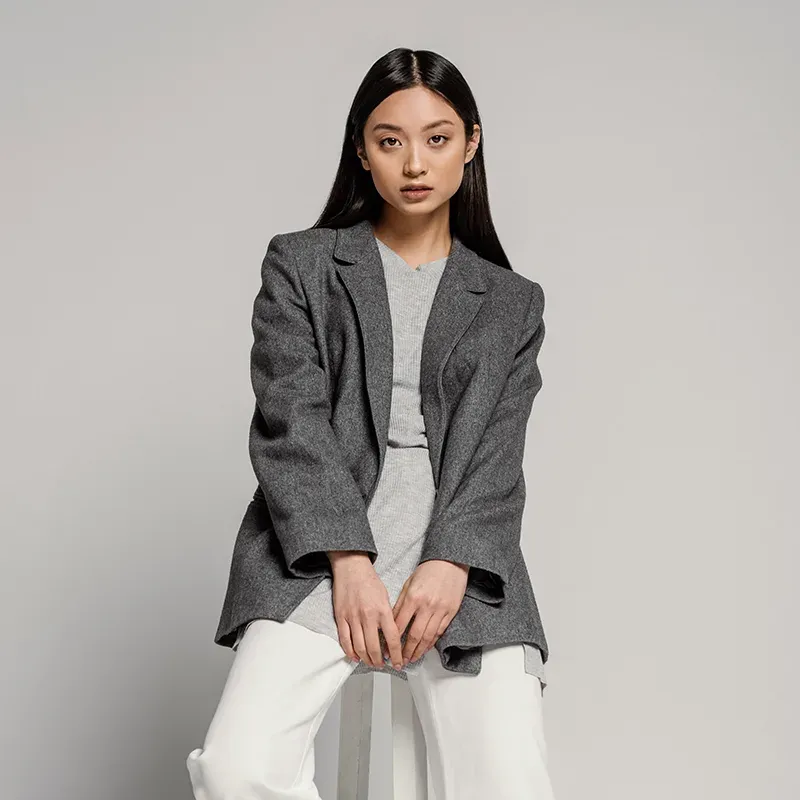
Photo: oversized structured blazer geometric streetwear urban fashion brutalist minimalist 2024, via agnowp.com
Something is changing on American streets, and it is not subtle. Walk through any major US city — New York, Chicago, Los Angeles, Atlanta — and the visual vocabulary of everyday dress has shifted. The silhouettes are sharper. The lines are cleaner. The proportions are more deliberate. What was once the exclusive language of high fashion runways and architecture school critiques has migrated, with surprising speed, into the wardrobes of style-conscious Americans who have never set foot in a design studio.
This is not coincidence. It is the result of two converging architectural design movements — brutalism and minimalism — colliding with a generation of consumers who are done with the ephemeral and hungry for something that feels, in both form and philosophy, built to last.
The Brutalist Resurgence: Raw Power in Ready-to-Wear
Brutalism — the mid-twentieth-century architectural movement defined by exposed concrete, massive geometric forms, and an unapologetic rejection of ornamentation — spent decades as the most polarizing aesthetic in the built environment. Buildings like Boston's City Hall and the Hirshhorn Museum in Washington, D.C., were simultaneously celebrated as bold civic statements and condemned as inhuman monoliths.
In 2024, that same tension is exactly what makes brutalism so compelling as a fashion reference.
The brutalist influence in contemporary American streetwear manifests most visibly in oversized structured outerwear — coats and blazers with exaggerated shoulders, rigid silhouettes, and a deliberate heaviness that refuses to apologize for its presence. Fabrics are chosen for their architectural behavior: thick wools that hold their shape, technical canvases that resist drape, bonded materials that stand away from the body rather than conforming to it.
Color palettes echo the movement's material honesty. Concrete grays, raw umbers, deep blacks, and oxidized tones dominate. Where color does appear, it arrives as a statement — a single panel of burnt orange or industrial blue against an otherwise monochromatic field, much like a brutalist building's occasional burst of colored tile against poured concrete.
The cultural resonance of this aesthetic is not difficult to understand. There is something deeply appealing, in an era of algorithmic trend cycles and fast-fashion disposability, about clothing that looks like it was designed to endure. Brutalist fashion does not ask to be liked. It simply occupies space — and in doing so, it commands a kind of respect.
Minimalism's Quiet Dominance
If brutalism is the loudest voice in this conversation, minimalism is the one that ultimately sets the terms of the debate.
American minimalism in fashion — distinct from its European counterpart in its pragmatism and its relationship to urban mobility — has reached a new level of sophistication in 2024. This is not the sparse, aspirational minimalism of the late 1990s, with its whisper-thin fabrics and studied nonchalance. This is a more rigorous, more architectural minimalism: one that strips a garment to its essential geometry and then executes that geometry with absolute precision.
The defining pieces are geometric basics — trousers with a clean, unbroken line from waist to hem; T-shirts and shirts cut with enough structure to hold their shape without relying on the body beneath them; outerwear reduced to its purest silhouette. The seams are architectural decisions. The proportions are considered. Nothing is accidental.
This approach draws directly from the minimalist architecture of figures like Tadao Ando and John Pawson, where the absence of decoration forces an acute attention to form, light, and material. In clothing terms, that translates to an emphasis on fabric quality, construction integrity, and the kind of fit that reveals itself only upon close inspection.
For American consumers, this shift represents a meaningful departure from the logo-driven, trend-reactive streetwear that dominated the previous decade. The new minimalism is not about invisibility — it is about the confidence to let structure speak for itself.
What the Shift Reveals About American Aesthetic Preferences
The simultaneous rise of brutalist and minimalist influences in American streetwear is not simply a matter of aesthetic fashion. It reflects a broader cultural recalibration.
The pandemic years accelerated a collective reassessment of consumption — what is worth buying, what is worth keeping, and what a garment should actually do for the person wearing it. Structured, architecturally considered clothing emerged from that period with a new kind of authority. It offered permanence in an environment of relentless change.
There is also a generational dimension to this shift. Younger American consumers — particularly those in the 25-to-40 demographic that drives streetwear culture — have grown up in cities shaped by the very architectural movements now influencing their wardrobes. They have a visual fluency with geometric form that previous generations did not. For them, wearing a structured blazer with brutalist proportions is not a reference they need explained. It is simply the visual language they inhabit.
Social media has accelerated this literacy. Platforms that prioritize visual impact have created a context in which architectural dressing — bold, graphic, immediately legible — performs exceptionally well. A clean-lined, geometric outfit photographs with the same authority that a striking building does. The aesthetic rewards are immediate and significant.
The Statement Piece as Urban Architecture
Perhaps the most significant development in this trend is the elevation of the statement piece to something approaching an architectural gesture.
In traditional streetwear, a statement piece was typically defined by its graphic content — a logo, a print, a slogan. In 2024's architecturally influenced landscape, the statement is made through form. An oversized structured coat that redefines the wearer's silhouette. A geometric blazer that transforms a simple outfit into something that reads as considered and intentional. A pair of wide-leg trousers with enough structural integrity to function almost as sculpture.
These pieces are not accessories to an outfit — they are the primary architectural element around which everything else is organized. This is a fundamentally different approach to dressing, one that prioritizes form over decoration and structure over novelty.
It is, in the truest sense, the wardrobe as built environment.
Looking Ahead: Where American Streetwear Goes From Here
The trajectory of these influences suggests that the architectural turn in American streetwear is not a passing cycle. The conditions that produced it — a consumer appetite for durability, a visual culture fluent in geometric form, and a broader cultural preference for substance over spectacle — are not going away.
What is likely to evolve is the dialogue between brutalism's bold assertion and minimalism's disciplined restraint. The most compelling work being done in American fashion right now exists precisely in that tension: garments that are bold enough to make a statement but rigorous enough to make it quietly.
At Edifice Clothing, that tension is the point. Structure is not a constraint — it is the condition that makes genuine expression possible. The design movements reshaping American streetwear in 2024 are not simply influencing what people wear. They are redefining what clothing, at its most intentional, can say.
The buildings have always been trying to tell us something. In 2024, the streets are finally listening.